
Guide to ITAD Compliance for Schools
Schools manage numerous IT devices, but disposing of them safely and legally is complex. IT Asset Disposition (ITAD) ensures secure data destruction, compliance with laws like FERPA, and proper recycling of e-waste. Without a structured process, schools risk legal penalties, data breaches, and environmental harm.
Key Takeaways:
- Data Security: Use NIST SP 800-88 standards to permanently erase data.
- FERPA Compliance: Protect student records and maintain audit-ready documentation.
- Vendor Certifications: Work with NAID AAA and R2v3-certified providers.
- Environmental Responsibility: Follow state laws on e-waste disposal.
To stay compliant, schools should:
- Audit all IT assets and track them with ITAM tools.
- Use certified data sanitization methods (Clear, Purge, Destroy).
- Partner with certified ITAD vendors who provide Certificates of Destruction.
- Integrate ITAD policies into daily operations and plan regular disposals.
How Schools Can Launch an E-Waste Recycling Program (K-12 & Campus Guide)
sbb-itb-c68f633
ITAD Regulations for Schools
Schools face a complex web of federal and state regulations when disposing of IT assets, with the Family Educational Rights and Privacy Act (FERPA) being a primary concern. FERPA requires schools to protect student records during the disposal process, making compliance non-negotiable.
The consequences of non-compliance can be severe. Violating FERPA could lead to the loss of federal education funding, which would be catastrophic for schools dependent on programs like Title I and special education funding. In 2023 alone, one school district faced over $1,000,000 in remediation costs, while another had to notify 50,000 families due to improper data disposal.
Data Privacy Laws for Schools
FERPA covers a wide range of personally identifiable information (PII), such as Social Security numbers, student IDs, grades, transcripts, disciplinary records, special education documents, and financial aid details. These protections apply to all devices owned by schools. Even when schools work with third parties like IT contractors, EdTech providers, or IT asset disposition (ITAD) vendors, the responsibility for safeguarding student data remains with the school.
It's important to note that factory resets on devices are not enough to fully erase sensitive data. Cached files, browser history, and saved credentials often remain accessible. Only professional data wiping methods that comply with NIST standards can ensure complete data erasure.
NIST SP 800-88 Guidelines
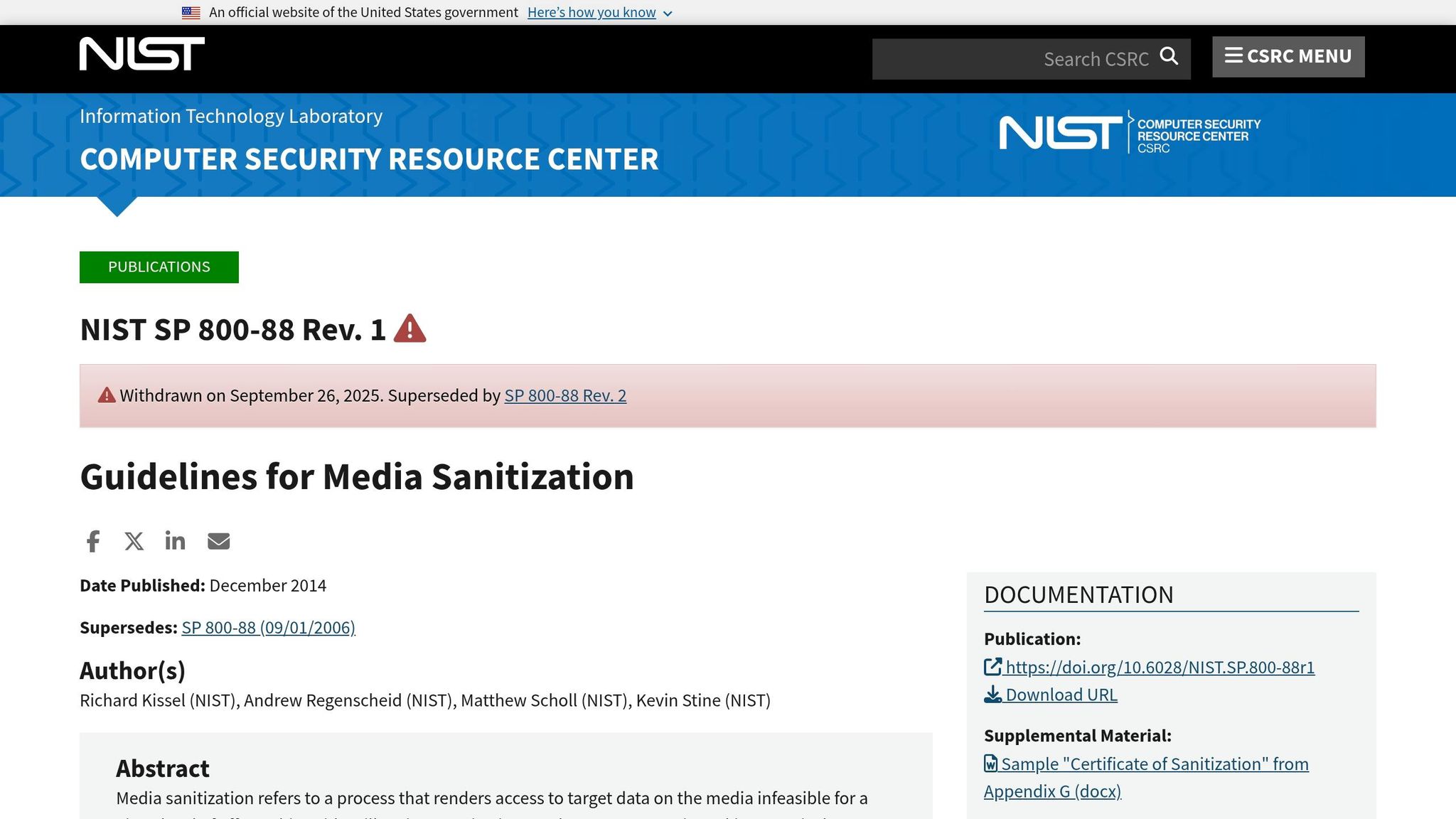
While FERPA doesn't prescribe specific technical methods for data disposal, the U.S. Department of Education endorses the guidelines in NIST Special Publication 800-88 Revision 1 as the gold standard for protecting student privacy. NIST 800-88 defines "media sanitization" as making access to data on a device infeasible, even with a significant recovery effort.
NIST outlines three levels of sanitization:
- Clear: Software-based methods that make devices reusable.
- Purge: Techniques that make data recovery impossible.
- Destroy: Physical destruction, such as shredding.
Schools should classify devices based on the sensitivity of stored information and choose the appropriate sanitization method. To maintain compliance, schools must also secure a Certificate of Destruction, which documents the device serial numbers and the specific sanitization process used. This certificate is a critical part of FERPA compliance, serving as an audit trail.
While protecting data is essential, schools must also meet environmental regulations when disposing of e-waste.
Environmental Compliance Standards
In addition to data security, environmental regulations play a significant role in shaping ITAD practices. Many states prohibit dumping e-waste in landfills and require public entities to meet specific recycling targets. For example, California's SB 20 and Washington's E-Cycle program mandate structured recycling systems.
The Department of Transportation (DOT) enforces strict rules on transporting devices containing hazardous materials, such as mercury or lithium-ion batteries. These rules include proper packaging, labeling, and the use of trained drivers. Schools should work with ITAD vendors certified in environmental and safety standards, such as R2v3 and ISO 14001:2015, to ensure compliance.
"The R2v3 Standard, developed by Sustainable Electronics Recycling International (SERI), is the most widely adopted certification for electronics reuse and recycling." - Securis
Schools also bear responsibility for ensuring that their ITAD vendor's downstream partners adhere to the same environmental and data security standards. This includes requesting annual reports on recycling rates and diversion metrics to meet state requirements.
ITAD Process for Schools
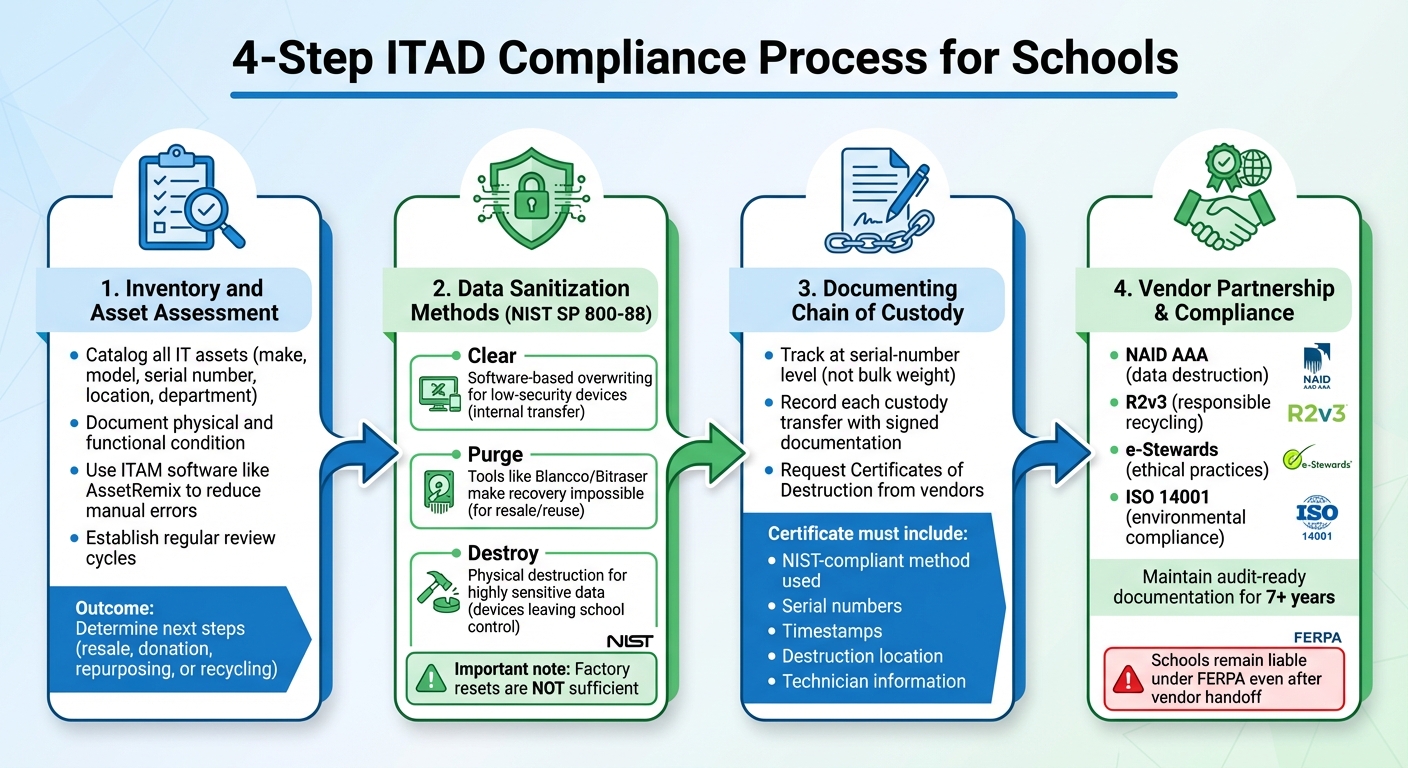
4-Step ITAD Compliance Process for Schools
A proper ITAD program begins with a detailed asset audit to protect student data and adhere to environmental standards. Each stage of the process builds upon the last to ensure compliance and secure data handling.
Inventory and Asset Assessment
Before disposing of IT equipment, schools must perform a thorough audit of all IT assets. This involves cataloging each device with details like make, model, serial number, location, and the department it belongs to. Additionally, notes on the physical and functional condition of each asset help determine its next steps - whether it’s suitable for resale, donation, internal repurposing, or certified recycling.
"A successful ITAD strategy begins with a comprehensive audit of all existing IT assets within the school." - Mid-Atlantic Tek
Using ITAM software like AdminRemix's AssetRemix can reduce manual errors and automate compliance reporting. This software helps schools maintain accurate inventories and simplifies tracking throughout the asset lifecycle. Establishing regular review cycles - rather than addressing disposals only when they pile up - prevents old equipment from cluttering storage spaces and mitigates potential data security risks.
Once the inventory is complete, the next step is implementing proper data sanitization protocols.
Data Sanitization Methods
Schools must follow the NIST SP 800-88 guidelines to select the right data sanitization method based on the sensitivity of the data stored.
- Clear methods involve software-based overwriting, suitable for devices with low-security needs being transferred internally.
- Purge methods, using tools like Blancco or Bitraser, ensure data recovery is impossible even with advanced tools, making them ideal for devices intended for resale or reuse.
- Destroy methods physically destroy devices, ensuring data is unrecoverable. This is the best option for highly sensitive data or devices leaving school control.
For devices containing sensitive student information, such as grades, health records, or personally identifiable data, schools must document the destruction process to remain compliant with FERPA regulations. Physical destruction is often the safest choice for devices with high-security data classifications that will no longer be under school control.
Documenting Chain of Custody
After sanitizing data, schools must rigorously track every asset's journey. Maintaining a documented chain of custody is critical - it’s the strongest safeguard against regulatory penalties and legal risks. Tracking should be done at the serial-number level, not just by bulk weight or general categories.
"Without chain-of-custody documentation, your organization may be unable to prove compliance, even if the data was destroyed. Always require asset-level tracking and Certificates of Destruction." - Securis
Each custody transfer should be recorded with signed documentation. Schools should also request formal Certificates of Destruction from vendors. These certificates must include details like the NIST-compliant method used, serial numbers, timestamps, destruction location, and technician information. Such records provide audit-ready evidence and protect schools from liability, even in cases where a vendor mishandles the process.
Best Practices for ITAD Compliance
Building a compliant ITAD (IT Asset Disposition) program calls for a systematic approach that weaves compliance into the daily operations of your IT department. By treating ITAD as a continuous process rather than a one-off task, schools can better manage risks and simplify audits.
Creating an ITAD Policy
An effective ITAD policy forms the backbone of any asset disposition strategy. It should mandate thorough data destruction to ensure sensitive student and institutional information is permanently erased before devices leave the premises. Regular policy reviews are crucial to avoid the buildup of outdated equipment.
The policy must also outline specific vendor requirements, such as certifications like R2 or e-Stewards, and insist on detailed chain-of-custody documentation to support audits. Including representatives from IT, administration, and teaching staff ensures the policy addresses all areas of need. Additionally, it should highlight the importance of environmentally responsible practices, such as certified recycling or repurposing of old devices. A strong policy sets the stage for precise record-keeping and compliance.
Maintaining Accurate Records
Keeping accurate records is a cornerstone of ITAD compliance.
"Regulators expect documented proof of every step, from pickup to final destruction." – Securis
Schools need to maintain detailed tracking for each asset, including chain-of-custody logs and NIST-compliant sanitization records. These records should capture specifics like serial numbers, make, model, and the disposal method for each device. Such documentation serves as critical evidence during audits.
Since schools are ultimately responsible for compliance, it’s essential to work with providers who offer 24/7 access to digital audit logs and certificates backed by third-party certifications, such as NAID AAA or R2v3.
Integrating ITAD with IT Asset Management
Combining ITAD processes with IT asset management (ITAM) systems can reduce manual work by creating a unified audit trail that links asset histories to disposition records. For instance, tools like AdminRemix's AssetRemix allow schools to attach Certificates of Destruction and NIST 800-88 sanitization reports directly to asset records, simplifying FERPA audits.
This integration not only eases the audit process but also strengthens the school’s overall compliance framework. ITAM data can help schedule timely disposals and eliminate unmanaged "ghost" assets. Partner with ITAD vendors that support seamless system integration and provide clear ESG reporting for a more transparent process.
Choosing an ITAD Vendor
After establishing a solid ITAD process and maintaining detailed records, the next step is selecting a certified ITAD vendor. This choice is pivotal for ensuring compliance with data security regulations and avoiding risks like FERPA violations, data breaches, or improper handling of e-waste.
"Selecting an uncertified vendor through a price-only procurement is the most preventable source of FERPA liability for school districts." – STS Electronic Recycling
To find certified vendors, consult directories such as i-SIGMA for NAID AAA certification or SERI for R2v3 status. Don’t rely on logos displayed on websites - always request official certification documents with valid expiration dates.
Vendor Certification Requirements
Certifications are critical when evaluating ITAD vendors. Here’s what to look for:
- NAID AAA Certification: This globally recognized credential ensures vendors comply with NIST 800-88 standards. It includes unannounced audits, employee background checks, and strict chain-of-custody protocols. Without this certification, a vendor cannot meet FERPA audit requirements, even if they claim adherence to best practices.
- R2v3 Certification (Responsible Recycling): This certification confirms vendors track assets throughout their lifecycle and adhere to rigorous data sanitization protocols. When considering R2v3-certified vendors, ensure they also have Appendix B certification, which specifically covers data sanitization.
- e-Stewards Certification: This is the highest standard for ethical and environmental practices. It bans e-waste exports to developing nations, prohibits the use of prison labor, and requires both NAID AAA and ISO 14001 certifications as prerequisites. Schools prioritizing environmental and social governance should focus on this certification.
Additional certifications, such as ISO 9001 (quality management), ISO 14001 (environmental compliance), and ISO 45001 (worker safety), provide extra assurance of a vendor’s operational standards.
Once you’ve reviewed certifications, dive deeper by asking targeted questions to assess a vendor’s operations and compliance.
Questions to Ask Vendors
Start with certification verification. Ask: "What specific certifications do you hold, and can you provide current documentation?" Always request to see the actual certificates with expiration dates.
For data security, inquire: "How do you ensure data is permanently destroyed according to NIST 800-88?" A reliable vendor should explain the differences between Clear, Purge, and Destroy methods and how they apply these to various devices.
Ask about their chain-of-custody protocols: "How do you track devices from pickup to final processing?" Ensure the vendor provides a Certificate of Destruction with serial numbers for each device. Generic batch manifests like "500 laptops destroyed" won’t suffice for FERPA audits.
Finally, assess transparency by asking: "Can we visit your processing facility or review downstream vendor audit reports?" A vendor’s hesitation here is a warning sign. For K-12 expertise, ask: "What experience do you have with FERPA-compliant data destruction for schools?"
Vendor Evaluation Checklist
Use this checklist to compare vendors and confirm they meet your school’s compliance requirements:
| Certification | Focus Area | Why Schools Need It |
|---|---|---|
| NAID AAA | Data Destruction | Ensures compliance with NIST 800-88 and FERPA |
| R2v3 | Responsible Recycling | Verifies ethical e-waste handling and lifecycle tracking |
| e-Stewards | Ethical Recycling | Prohibits e-waste exports to developing nations |
| ISO 14001 | Environmental Management | Confirms adherence to environmental laws |
Be alert for warning signs like expired certifications, missing data destruction policies, reluctance to disclose downstream partners, or an inability to provide serialized tracking. If your school uses cooperative purchasing contracts like BuyBoard or TIPS USA, you can often skip the full RFP process and still access pre-vetted, certified vendors.
Choosing a vendor that meets these rigorous standards ensures your ITAD process protects student data, complies with regulations, and addresses environmental responsibilities. Aim to finalize vendor selection by January or February to secure your preferred summer pickup schedule.
Conclusion
Key Takeaways
ITAD compliance plays a critical role in protecting schools from data breaches, legal issues, and improper disposal practices. It’s essential to ensure that all devices containing sensitive information undergo NIST 800-88–compliant data sanitization before being discarded. Under FERPA (34 CFR Part 99), schools remain legally accountable for their data - even after devices are handed over to vendors. This means maintaining audit-ready documentation for at least seven years is non-negotiable.
"Compliance is a shared responsibility. Even with a certified ITAD provider, your organization remains accountable. If your organization can't produce audit-ready documentation, liability falls on you, even if the vendor failed." – Securis
Certified recycling programs not only promote responsible disposal but also help schools meet state requirements. Additionally, remarketing usable devices can generate revenue to offset the cost of upgrading technology.
Having a strong ITAD policy in place reduces risks and boosts operational efficiency. Tools like AdminRemix's AssetRemix can streamline this process by providing the necessary audit trail for compliance and accountability. With these insights, schools should take actionable steps to incorporate ITAD into their daily operations.
Next Steps for Schools
Start by drafting a clear ITAD policy that outlines how data will be handled, sanitized, and what steps to take in the event of a breach. Plan regular disposal schedules, ideally during summer breaks (June–August), to avoid the buildup of outdated equipment and ensure timely vendor pickups.
Integrate ITAD processes with an IT asset management system. AdminRemix's AssetRemix is a valuable tool for tracking device lifecycles, managing inventory, and keeping detailed records for FERPA audits and school board reviews. From acquisition to disposal, accurate asset tracking creates a strong audit trail that protects schools from liability.
Lastly, insist on vendor certifications in all agreements. Certifications like NAID AAA for data destruction and R2v3 for responsible recycling are essential. Require vendors to provide Certificates of Destruction, complete with serial tracking and GPS-monitored chain of custody records.
"Selecting an uncertified vendor through a price-only procurement is the most preventable source of FERPA liability for school districts." – STS Electronic Recycling
FAQs
How long should we keep ITAD records for FERPA audits?
When it comes to FERPA audits, it's crucial to keep ITAD (IT Asset Disposition) records for at least 7 years. These records include key documentation, such as certificates of destruction, which are essential for proving compliance and maintaining a reliable audit trail.
Why 7 years? Some experts suggest this retention period as a safeguard against potential complications that could arise during audits. By holding onto these records, you ensure you're prepared to address any questions or concerns that might surface.
When should we use Clear vs Purge vs Destroy on school devices?
In IT asset disposition, there are three primary methods to securely sanitize data: Clear, Purge, and Destroy.
- Clear: This involves modifying data using basic rewriting techniques. It's a practical choice when devices are being reused and only moderate security is required.
- Purge: For situations demanding a higher level of security, this method uses advanced techniques to make data recovery virtually impossible. It's often used before devices are reused or resold.
- Destroy: This method ensures data is completely irrecoverable by physically damaging the storage media. It's typically reserved for devices that won't be reused or resold.
Each method is tailored to specific security needs and device lifecycle scenarios.
What vendor proof do we need besides a Certificate of Destruction?
Along with a Certificate of Destruction, it's important to have chain-of-custody documentation, serial-level tracking, and detailed audit trails. These records play a crucial role in confirming compliance with data privacy laws and validating that data sanitization procedures were carried out correctly.